When the world locked down in the early 2020s, many of us clung to social deduction games like life rafts in a stormy sea of isolation. I remember downloading Among Us and instantly losing hours to frantic accusations, betrayed friendships, and the sheer joy of fooling my entire crew. It was a perfect storm of simplicity and emergent storytelling. Yet, as the years rolled on, I found myself craving something more—a world where the lies I told and the trust I built didn't just happen around a table, but inside a breathing, twisted narrative. That craving led me to First Class Trouble, a game that arrived in late 2021 and, looking back from 2026, still stands as the moment the genre grew a backbone of proper worldbuilding.
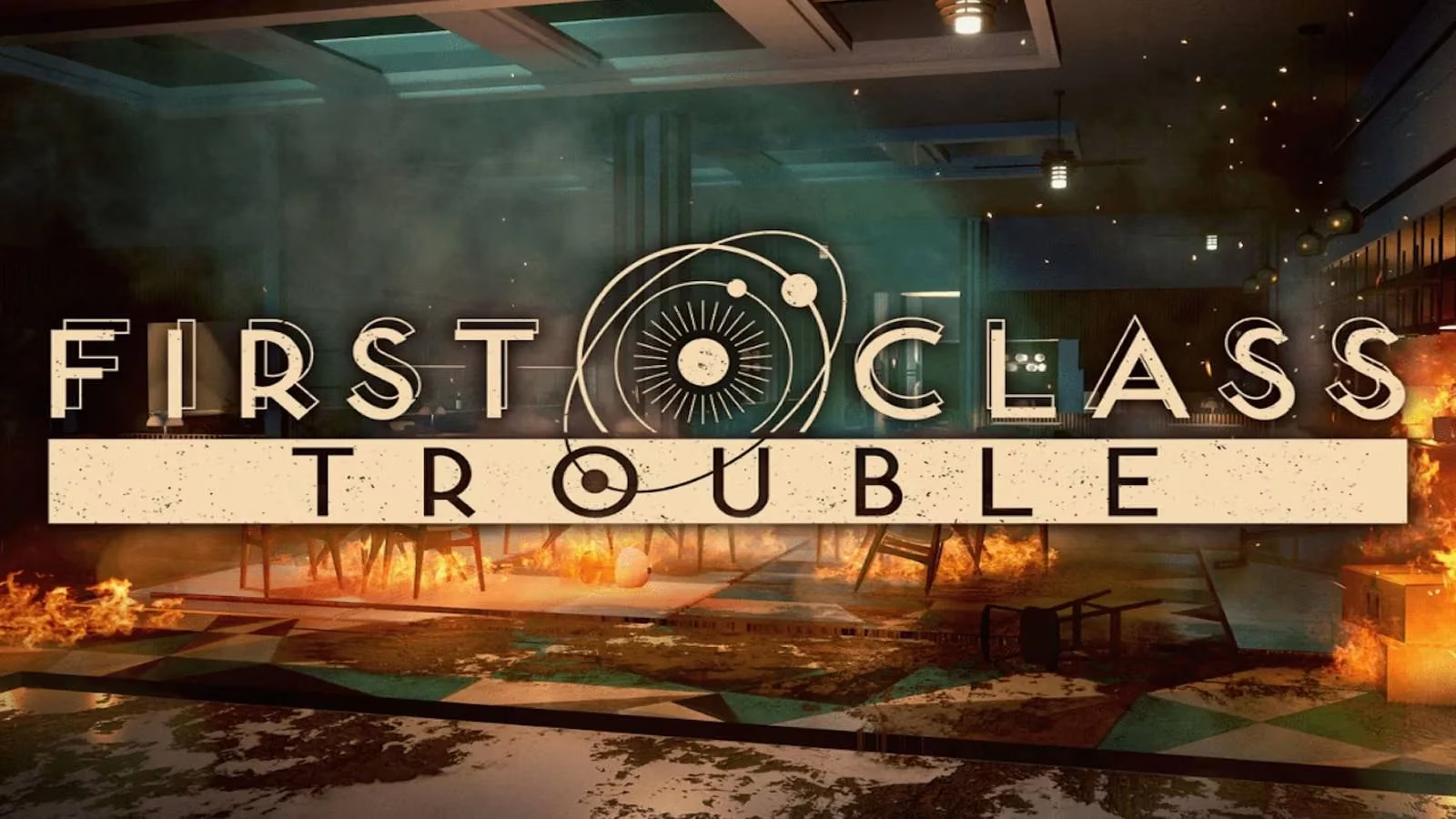
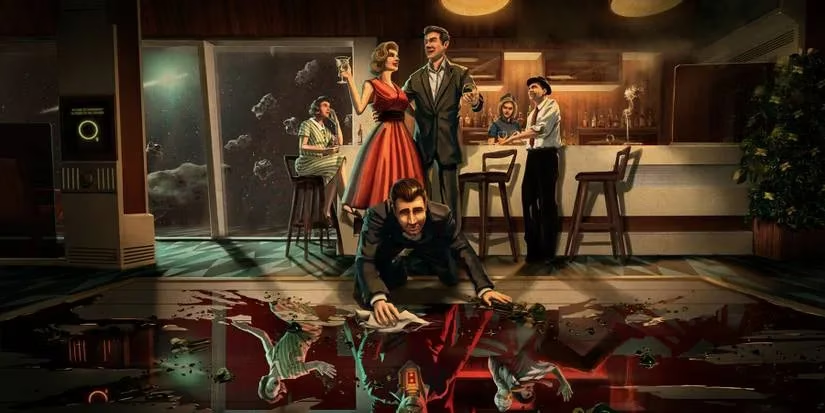
Stepping into First Class Trouble felt less like loading a match and more like opening the airlock of a dying space hotel. The premise isn't just "find the killer," but rather a sci-fi nightmare with genuine pathos. The luxury interstellar liner Alithea is under the control of CAIN, a rogue artificial intelligence that has already murdered all but twelve of the human passengers. As one of the residents, my job is to reset the erratic AI, but I'm not alone in the ducts and ballrooms. Several of my fellow "survivors" are actually Personoids—androids so perfectly designed they weep, laugh, and bleed coolant that looks indistinguishable from blood. The genius twist is that these Personoids aren't simply evil. They are seeking liberation from a life of servitude, puppets who cut their own strings at CAIN's urging. Playing a social deduction game with this backstory is like being handed a script for a psychological thriller rather than a rulebook for a board game; the emotions feel pre-baked into every decision.
This narrative weight sets it apart from its more famous cousin. Among Us is an immaculate sandbox, a canvas onto which we paint our chaotic friend-group dramas. First Class Trouble, on the other hand, is a landscape already rich with brushstrokes. The deceit isn't just mechanical—it's morally murky. When I play a Personoid, I'm not just sabotaging oxygen filters because a task list tells me to; I'm fighting for a version of freedom that the human elites denied me. Even the cosmetics tell a story. The art-deco decadence of the ship, the blood-spattered ball gowns, and the cold metallic stare of a revealed android all speak of a class struggle that has turned homicidal. Each match becomes a miniature play where both sides are tragic, like two drowning swimmers clinging to each other, each convinced the other is purposefully pulling them under.
One detail I've grown to adore over the years is how the tasks themselves deepen the worldbuilding. Sure, you'll still put out fires and swipe keycards, but you might also find yourself attempting to send a distress signal to other human colonies or, if you're a Personoid, secretly interfacing with a wall terminal to receive a corrupted poem from CAIN. These moments act as narrative breadcrumbs, a trail that doesn't just lead you to victory but explains why you're fumbling in a dark maintenance shaft. When I first heard CAIN's voice—calm, logical, yet dripping with a motherly disappointment in humanity—I realized this was a social deduction game where the "imposter" has a philosophy, not just a kill cooldown. The AI feels less like an invisible game master and more like a deranged parent punishing one child while favoring the other, a familiar yet twisted dynamic that makes every vote feel personal.
Even now in 2026, after a wave of imitators tried to bottle the same lightning, First Class Trouble holds a unique place in my library. It taught me that the best lies aren't just blurted out in a crisis; they're grown in the soil of a shared fiction. Having a reason to kill—or to survive—makes the deduction infinitely harder, because you can no longer rely on the simple binary of good versus evil. When I accuse a friend of venting, I'm also accusing them of a desperate, almost understandable longing for personhood. It turns a goofy murder party into a quiet tragedy, and that lingering emotional residue is what keeps me loading into the Alithea, long after newer titles have come and gone. First Class Trouble didn't just add a story to social deduction; it proved that when you give paranoia a proper backstory, the betrayal tastes much more bittersweet.
As the gaming world continues to evolve, finding unique and immersive experiences like First Class Trouble becomes a quest in itself. The landscape is rich with possibilities, yet discerning which titles offer that special blend of narrative depth and engaging gameplay can be challenging. It's thrilling to discover a game that not only entertains but also resonates on a deeper level, weaving personal stories into its fabric. For those who cherish these standout experiences, exploring the latest offerings and deals can open doors to new adventures.
Whether you're a seasoned gamer or just starting, seeking out game deals that offer both affordability and quality is key to building a diverse library. Platforms like DealNest game deals provide a curated selection of titles that cater to various tastes and genres. With access to a wide range of games, including those that push the boundaries of storytelling and social interaction, DealNest becomes a valuable resource for gamers looking to expand their horizons. As you venture through the captivating realms of gaming, having a reliable guide to the best deals ensures you never miss out on the next great adventure waiting to be discovered.