You know, when I look at the fighting game landscape in 2026, it's fascinating to see how little the throne has changed hands. Here I am, a player who's been around the block, and the big names are still the same familiar faces. Street Fighter 6 has been out for a few years now, Tekken 8 had its explosive launch, and Mortal Kombat 12 delivered the brutal kombat we expected. These series started in the '80s and '90s, right? They're the undisputed veterans, the old warlords who have run these digital streets for decades. Even Super Smash Bros., which some still debate as a 'true' fighter, is a child of the late '90s. So, where does that leave innovation? Where do new players find their gateway? That's where my mind always goes back to Injustice. Can you believe it's been over a decade since Injustice: Gods Among Us first landed? And yet, when I think about what game truly shook up the status quo and built a bridge for newcomers, its legacy feels more relevant than ever.
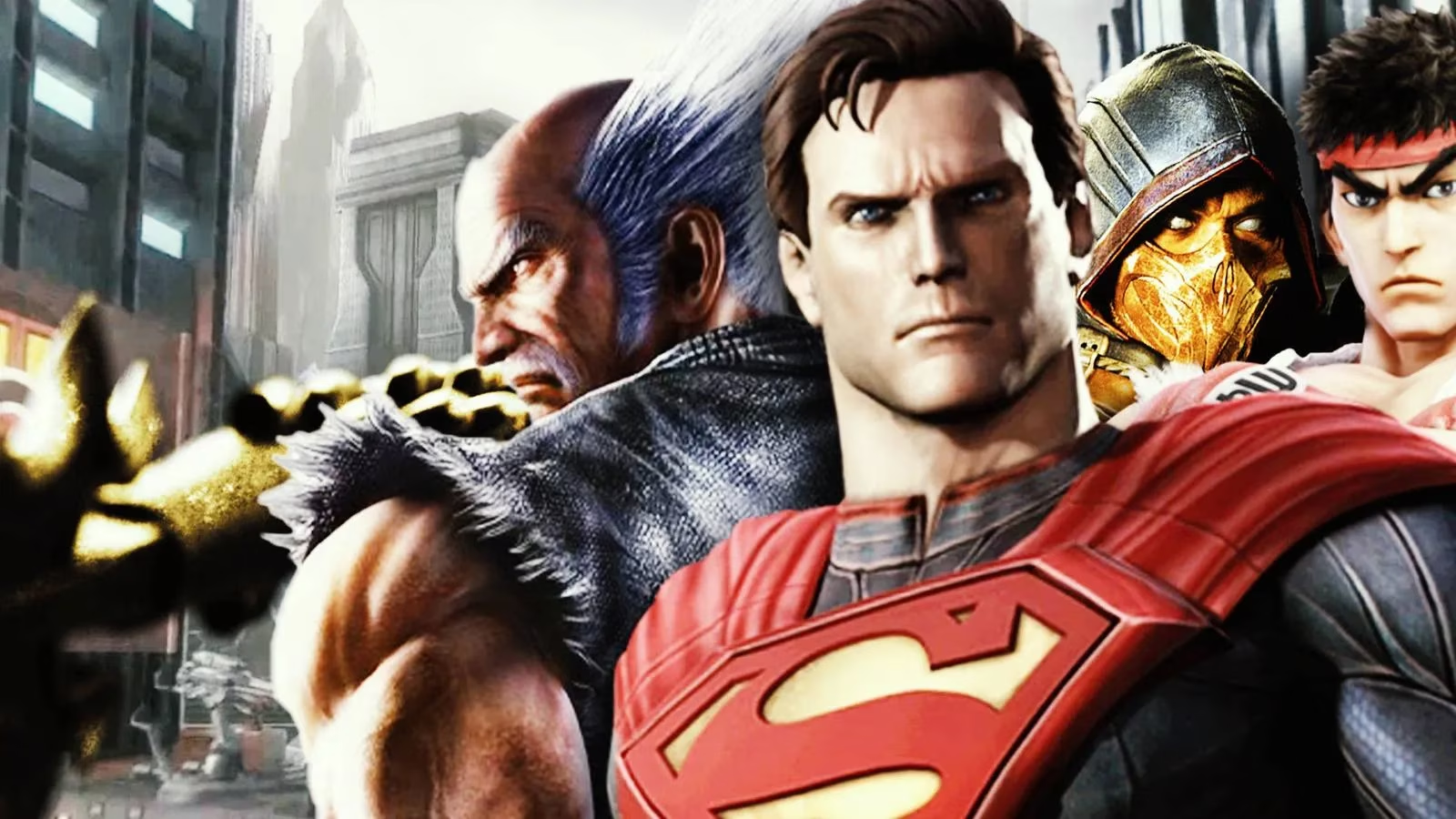
Let's rewind a bit. I remember when Injustice first came out. It wasn't some scrappy, unknown studio trying to dethrone the kings. It was NetherRealm Studios—the very same team behind Mortal Kombat. Think about that strategic move for a second. Here was a studio with a firm footing in brutal, complex, and gritty fighters, deciding to use that expertise to create something... different. They had the IP of DC Comics, which gave them a massive built-in audience, but more importantly, it gave them permission. Permission to craft a game that was a little less mechanically daunting, a bit more approachable, while still feeling substantial. Mortal Kombat could sometimes feel like a club for the ultra-dedicated, all frame data and punishing combos. Injustice, by contrast, felt like it was holding the door open. It was their way of saying, "Hey, you like these superheroes? Come on in, the fight's just starting."
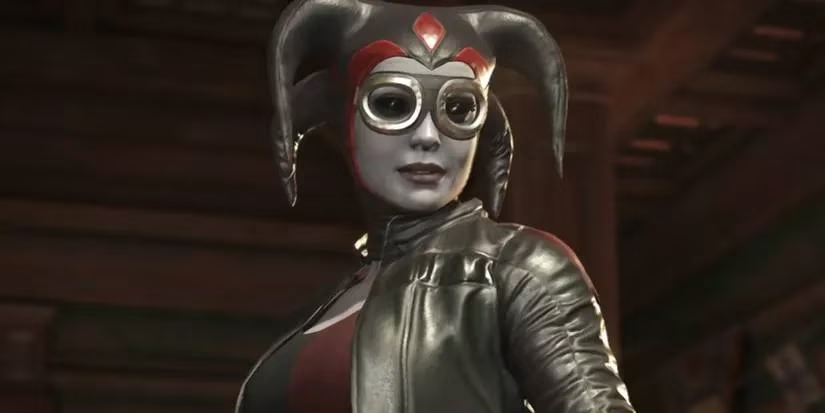
And what a refreshing entry it was! It kept that dark, cinematic, realistic visual style NetherRealm is known for—none of the overly cartoonish looks that sometimes mark 'beginner-friendly' fighters—but it poured personality into every corner. This wasn't just a roster of characters with special moves; it was a roster of characters. Superman fought like the Man of Steel, Batman utilized his gadgets, and Harley Quinn was all chaotic acrobatics. The movesets reflected their comic book souls. I mean, where else could you see Poison Ivy realistically brawling with Superman? It was comic book logic made playable, and it was glorious.
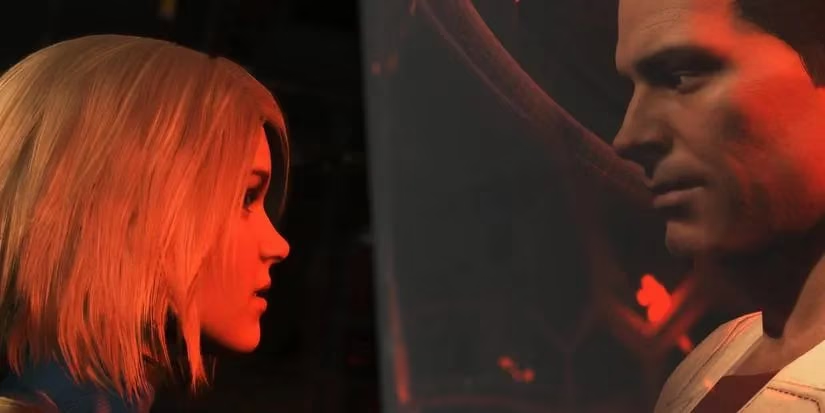
But here's the thing that really hooked me and so many others: the story. Let's be honest, most fighting game narratives are... functional. They're a thin excuse to have Ryu fight Ken for the 1000th time. Injustice changed the game. By drawing from decades of DC lore, it built a world where the conflicts mattered. The relationships between Batman and Superman, between the heroes and the regime, felt deep and established before you even pressed start. This depth bled into the fights themselves. The pre-fight banter wasn't generic trash talk; it was character-specific dialogue that acknowledged history and motive. When Green Arrow faced Deathstroke, the words they exchanged meant something. It made every match feel like a chapter in a bigger story, not just a random versus mode.
This, I believe, is Injustice's enduring genius. Fighting games pride themselves on depth and complexity, and that's what keeps the hardcore community thriving. But for someone new, that complexity can be a towering wall. Learning the lore of a 30-year-old series and mastering intricate mechanics is a huge ask. Injustice provided a perfect on-ramp:
-
Accessible Foundation: It used a familiar control scheme and mechanics that were easier to grasp than the most hardcore fighters, lowering the initial skill floor.
-
Narrative Hook: It offered a compelling, cinematic story mode that gave you a reason to care about the outcome of each fight. You weren't just learning combos; you were fighting for a cause.
-
Personality-Driven Gameplay: Each character felt unique and true to their source material, making it intuitive and fun to experiment. You could guess how a character might fight based on their comics or movies.
Of course, the journey hasn't been flawless. I still have flashbacks to the heavy RNG and microtransactions in Injustice 2's gear system. Remember grinding for that perfect piece of equipment for your main, only to get a legendary cowl for a character you never use? It could be frustrating. And sometimes, I think the aesthetic could have diverged a bit more from its Mortal Kombat roots to carve out an even more distinct visual identity.
But these are footnotes in a legacy that's overwhelmingly positive. As we stand here in 2026, with Street Fighter, Tekken, and Mortal Kombat all reaching new technical heights, Injustice's role feels cemented. It's not the new kid anymore; it's the wise ambassador. It proved that a fighting game could be both accessible and deep, both cinematic and competitively viable. It built a bridge between the party-style, casual-friendly brawlers and the ultra-complex tournament staples.
The fighting game community is incredible, but it has historically been insular. Breaking into that scene can be intimidating. Injustice, over a decade ago, laid down the best welcome mat the genre has ever seen. It said, "Your fandom for these characters is enough to get you started. Your curiosity is your ticket." And that's why, even now, when someone asks me, "I've never played a fighting game before, where should I start?" my mind still goes back to the world of gods and heroes. It remains, in my view, the smoothest and most compelling path into the big, bustling, and sometimes intimidating city of fighting games.