As a gamer who's been around the block a few times, I've seen trends come and go. But one thing that's remained constant in my heart is the love for a good story. You know, the kind that grabs you by the collar and doesn't let go until the credits roll. And in 2026, we're living in a golden age for that exact type of experience—interactive novels that blur the line between gaming and literature. Let me take you on a tour of some unforgettable digital stories that have stuck with me.
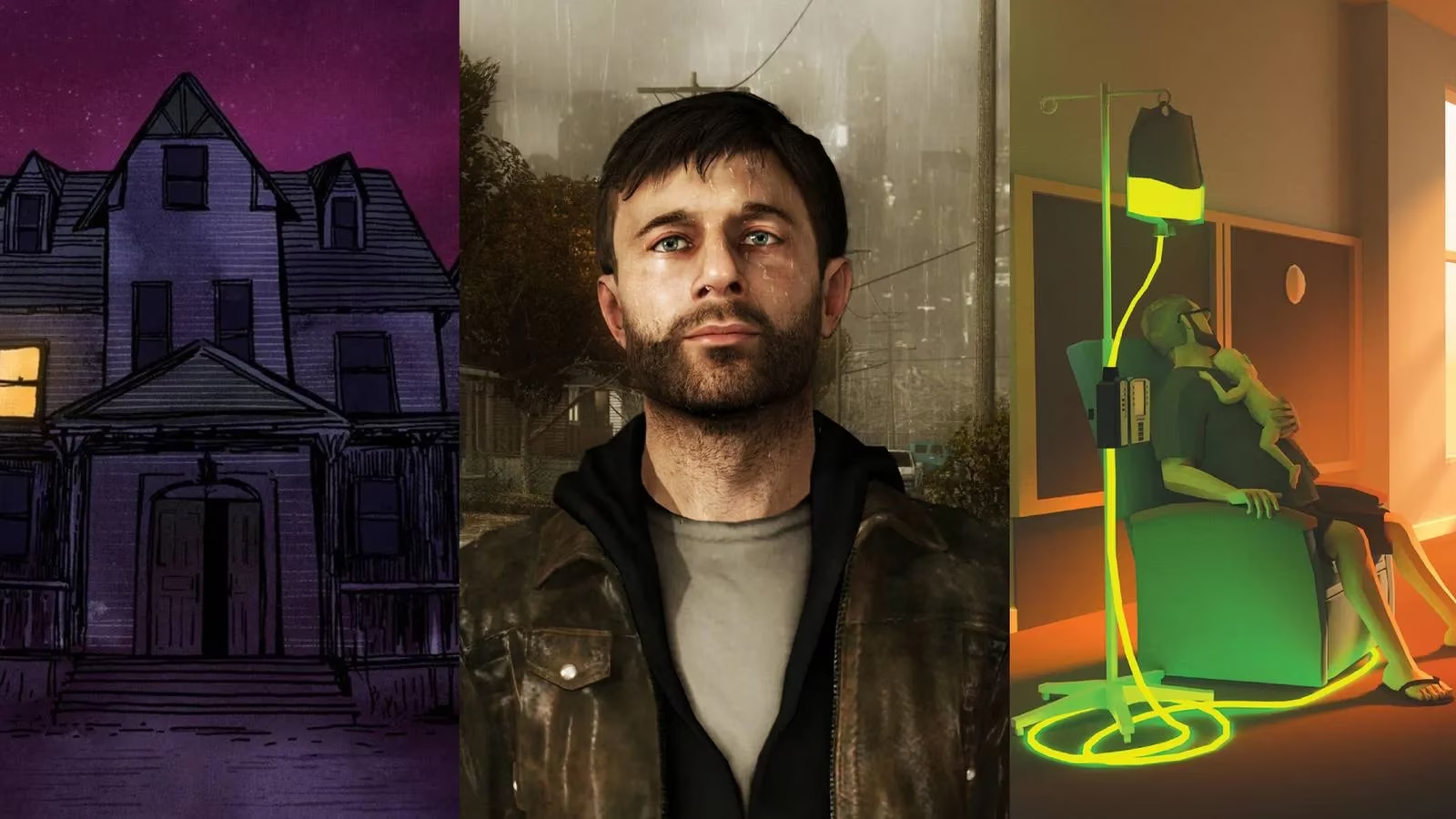
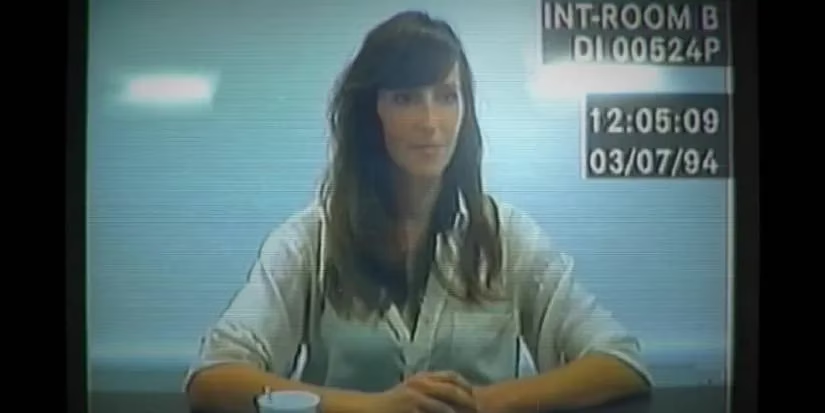
Remember FMV games? Most people thought they died with the Sega CD. But then came Her Story, a game that made me feel like a real detective. Sitting there, sifting through interrogation tapes on a simulated police database—it was like being the star of my own noir film. The beauty was in its simplicity: no health bars, no skill trees, just my brain and a mystery. The story unfolded through those video clips, and piecing together the truth felt more satisfying than any boss battle I've ever won. It proved that sometimes, the most compelling gameplay is just... thinking.
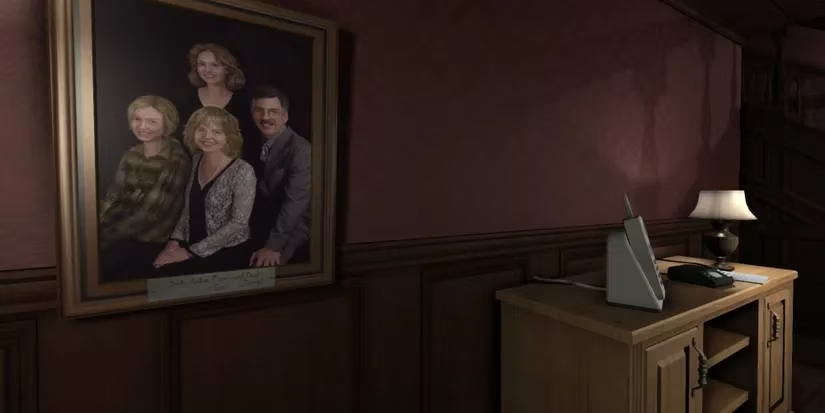
Then there's Gone Home. Oh, this one. I remember booting it up expecting... well, I'm not sure what I expected. What I got was one of the most atmospheric narrative experiences of my life. Playing as Katie, returning to an empty family home, was strangely intimate. The game doesn't hold your hand—it just lets you explore. And through environmental storytelling (seriously, the details in that house!), a family's secrets slowly unravel. No combat, no puzzles beyond observation, yet it managed to keep me on edge like a thriller. It's the gaming equivalent of finding someone's diary and reading it cover to cover in one sitting.
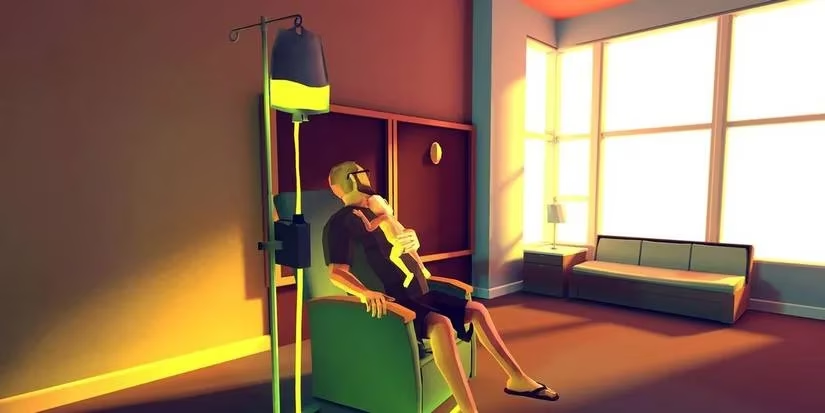
Now, let's talk about the game that made me cry. That Dragon, Cancer isn't just a game; it's an emotional experience. Based on the developers' real-life tragedy of their young son battling cancer, it handles its subject with raw honesty. The gameplay is minimal—mostly symbolic interactions—but that's not the point. The point is the story, which hits you with the emotional weight of a thousand RPGs combined. Playing it in 2026 still feels just as poignant. It taught me that games can be more than entertainment; they can be empathy machines.
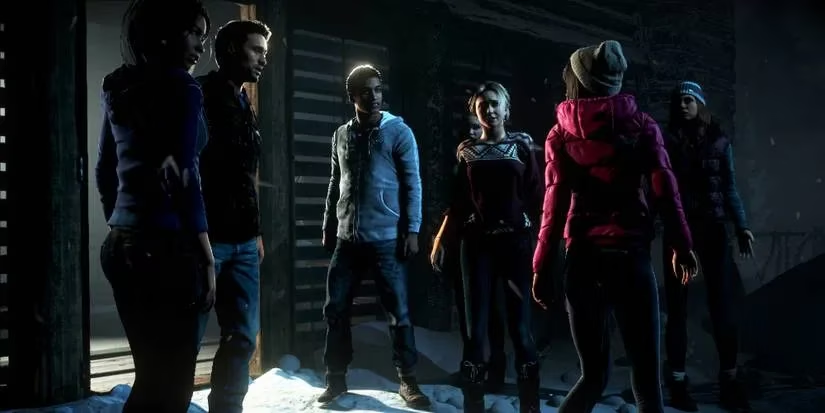
Of course, not all interactive novels are quiet, contemplative experiences. Until Dawn is basically a playable horror movie where you control eight doomed teenagers. The genius here is the butterfly effect system—your choices actually matter, and characters can live or die based on your quick-time event skills (or lack thereof). I've replayed it multiple times just to see different outcomes. It's like one of those 'choose your own adventure' books, but with jump scares and way better production values.
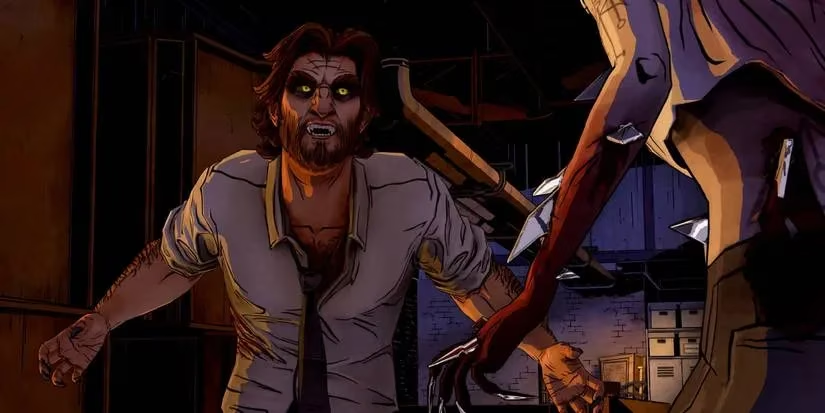
When it comes to style, few match The Wolf Among Us. Telltale's graphic novel aesthetic was perfect for this noir fantasy where fairy tale characters live in hiding among humans. Playing as Bigby Wolf (yes, the Big Bad Wolf as a detective) felt incredibly cool. The dialogue choices actually felt meaningful, and the murder mystery plot had more twists than a pretzel factory. What I loved most was how it made me care about characters I thought I knew from childhood stories, showing them in a completely new, gritty light.
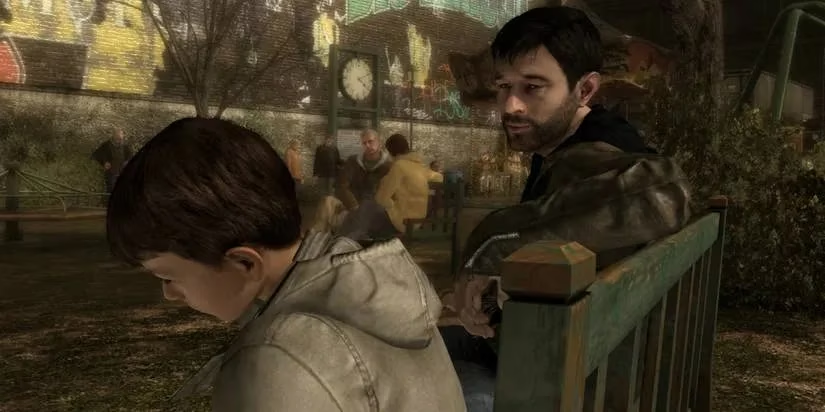
And we can't forget the grandfather of modern interactive dramas: Heavy Rain. Before everyone was making choice-based narratives, Quantic Dream was out here making me sweat over quick-time events to save a child's life. The Origami Killer case had me hooked from the start, and playing through four different perspectives made the story feel massive. The multiple endings meant my decisions carried real weight—something that's become standard now but felt revolutionary when I first played it.
Looking at the landscape in 2026, interactive novels have evolved but kept their soul. They prove that games don't need complex mechanics to be compelling—sometimes, all you need is:
-
A gripping story that makes you forget you're holding a controller
-
Meaningful choices that actually change the narrative
-
Characters you can care about (or love to hate)
-
Atmosphere so thick you could cut it with a knife
From my experience, here's what makes these games special compared to traditional genres:
| Traditional Game | Interactive Novel |
|---|---|
| Skill-based progression | Choice-based progression |
| Gameplay-first design | Story-first design |
| Challenge comes from mechanics | Challenge comes from decisions |
| Replay for higher scores | Replay for different outcomes |
What's beautiful about these experiences is their accessibility. You don't need lightning-fast reflexes or to memorize combos. You just need to be curious, to care, to want to see what happens next. They're perfect for:
-
Story lovers who want more agency than books or movies offer
-
Casual gamers looking for deep experiences without steep learning curves
-
Anyone who enjoys being part of a narrative rather than just observing it
As technology advances, I can only imagine where interactive storytelling will go next. Virtual reality novels? AI-generated branching narratives that change based on your personality? The possibilities are endless. But one thing's for sure: the human love for a good story isn't going anywhere, and games that tap into that will always have a place in my heart (and on my hard drive).
So if you haven't dipped your toes into these interactive novels yet, what are you waiting for? Grab some popcorn (metaphorically speaking), make some choices you'll probably regret, and lose yourself in a story where you're not just along for the ride—you're helping steer the ship. Just maybe don't start with That Dragon, Cancer unless you're ready to feel all the feelings. Trust me on that one.