As we look back from the vantage point of 2026, the PlayStation VR2's launch period stands as a watershed moment for virtual reality gaming. With the PlayStation 5 firmly established, Sony's next-generation VR headset needed a stellar lineup to justify its ambitious hardware. It was a launch not defined by a single title, but by a vibrant constellation of experiences, each promising to leverage the PSVR 2's advanced features like its orb-shaped Sense controllers, haptic feedback, and stunning 4K HDR visuals. The initial library was a carefully curated mix of blockbuster exclusives, beloved ports, and innovative upgrades, designed to offer something for every type of gamer stepping into this new virtual frontier.
The Flagship Experience: A Journey of Redemption
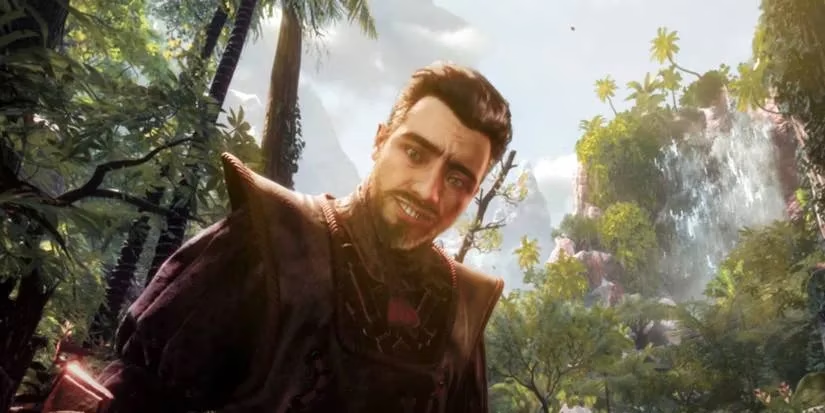
The undeniable system seller was Horizon: Call of the Mountain. This wasn't merely a spin-off; it was a full-scale immersion into the breathtaking, machine-dominated world of Horizon, reimagined from the ground up for VR. Shifting focus from Aloy to a new protagonist, the former Shadow Carja warrior Ryas, the game offered a potent mix of awe-inspiring exploration, intense bow combat, and a deeply personal story of redemption. Climbing massive landscapes and facing towering machines felt less like playing a game and more like conducting a symphony of movement and precision, where every draw of the bowstring was a tactile conversation with the environment. Bundled with the headset itself, it served as the perfect gateway drug to the PSVR 2's capabilities.
A Galaxy of Genres: From Social Deduction to Cosmic Exploration
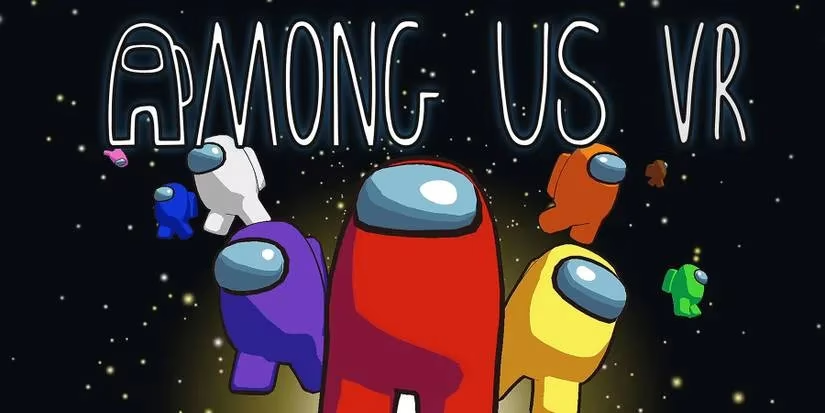
Beyond the flagship title, the launch lineup was remarkably diverse. Social deduction took a thrilling leap into three dimensions with Among Us VR. The classic game of trust and betrayal became exponentially more intense when you could literally look a crewmate in the eye (or visor) before ejecting them into the void of space. It transformed the social dynamics into something as delicate and fraught with tension as a game of Jenga played on a moving train.
For those seeking vast, persistent worlds, the free upgrade for No Man's Sky was a revelation. The infinite universe became a tangible place to touch, with the PSVR 2's controllers making starship piloting and multi-tool manipulation feel incredibly physical. Similarly, the MMORPG Zenith: The Last City offered a free upgrade, allowing adventurers to explore its anime-inspired landscapes and battle alongside friends with renewed immersion.
The lineup also catered to specific genre enthusiasts with precision:
-
FPS & Co-op Action: Gamers could enlist in The Light Brigade, a rogue-lite shooter with procedurally generated levels where restoring light to the world felt like a solemn, tactical pilgrimage. Alternatively, they could team up in After the Fall to mow down hordes of frostbitten zombies in frenetic co-op battles.
-
Puzzle & Adventure: The charming physics-based puzzle game Tentacular let players be the hero—a giant, friendly tentacled monster helping islanders. Hello Neighbor: Search and Rescue brought stealth and puzzle-solving into VR, tasking players with uncovering their neighbor's secrets.
-
Tabletop & Simulation: Demeo perfectly translated the dungeon-crawling board game experience to VR, feeling like a magical diorama come to life. Cities VR: Enhanced Edition allowed urban planners to literally reach into and mold their metropolitan creations.
-
Narrative & Thrills: The Dark Pictures: Switchback VR offered a terrifying roller-coaster ride through the anthology's horrors, while Star Wars: Tales from the Galaxy's Edge let players live out a droid technician's adventure on Batuu.
The Upgrade Path: Honoring Legacy in a New Generation
A significant and consumer-friendly strategy was the provision of free upgrades for key titles. While the PSVR 2 was not backward compatible, developers ensured beloved experiences could make the generational leap. Games like No Man's Sky, Zenith: The Last City, and Swordsman VR received enhancements that utilized the new hardware's unique features, ensuring players' investments were protected and their favorite virtual worlds could be revisited with unprecedented fidelity. This approach was like expertly repotting a cherished plant into richer soil—allowing it to grow and flourish in new, more supportive conditions.
The Horizon Beyond Launch
Even at launch, the future looked bright. Announced titles like the Resident Evil Village VR mode promised to bring a new level of visceral terror, transforming the player's presence in Ethan Winters' nightmare from observational to inescapable. Other confirmed games on the horizon, such as Crossfire: Sierra Squad and the Jurassic Park Aftermath Collection, signaled a steady pipeline of content designed to sustain the platform's momentum.
In retrospect, the PSVR 2's launch library was a masterclass in variety and quality. It wasn't a single monolithic experience but a sprawling ecosystem. From the epic, set-piece grandeur of Horizon to the intimate, nerve-wracking whispers in Among Us, and from the creative solitude of Cities VR to the collaborative chaos of Demeo, it offered a compelling answer to the question of "what is VR for?" It was for everything. The library served as both a stunning tech demo and a substantial collection of full-fledged games, proving that the PSVR 2 was more than just hardware—it was a passport to a multitude of new realities.