The stars blinked coldly through the void, silent witnesses to a different kind of emptiness. Across the digital cosmos, millions of crewmates stood frozen at their airlocks, their colorful spacesuits rendering them as bright, helpless ghosts. The lobbies were barren. The familiar hum of the Skeld's engines had gone quiet. For the second time in just a handful of days, the world of Among Us had slipped into an unexpected, eerie sleep. The culprit, whispered through the static of Discord servers and Reddit threads, was a familiar specter: a DDoS attack, a storm of malicious traffic intended to drown the servers in noise.
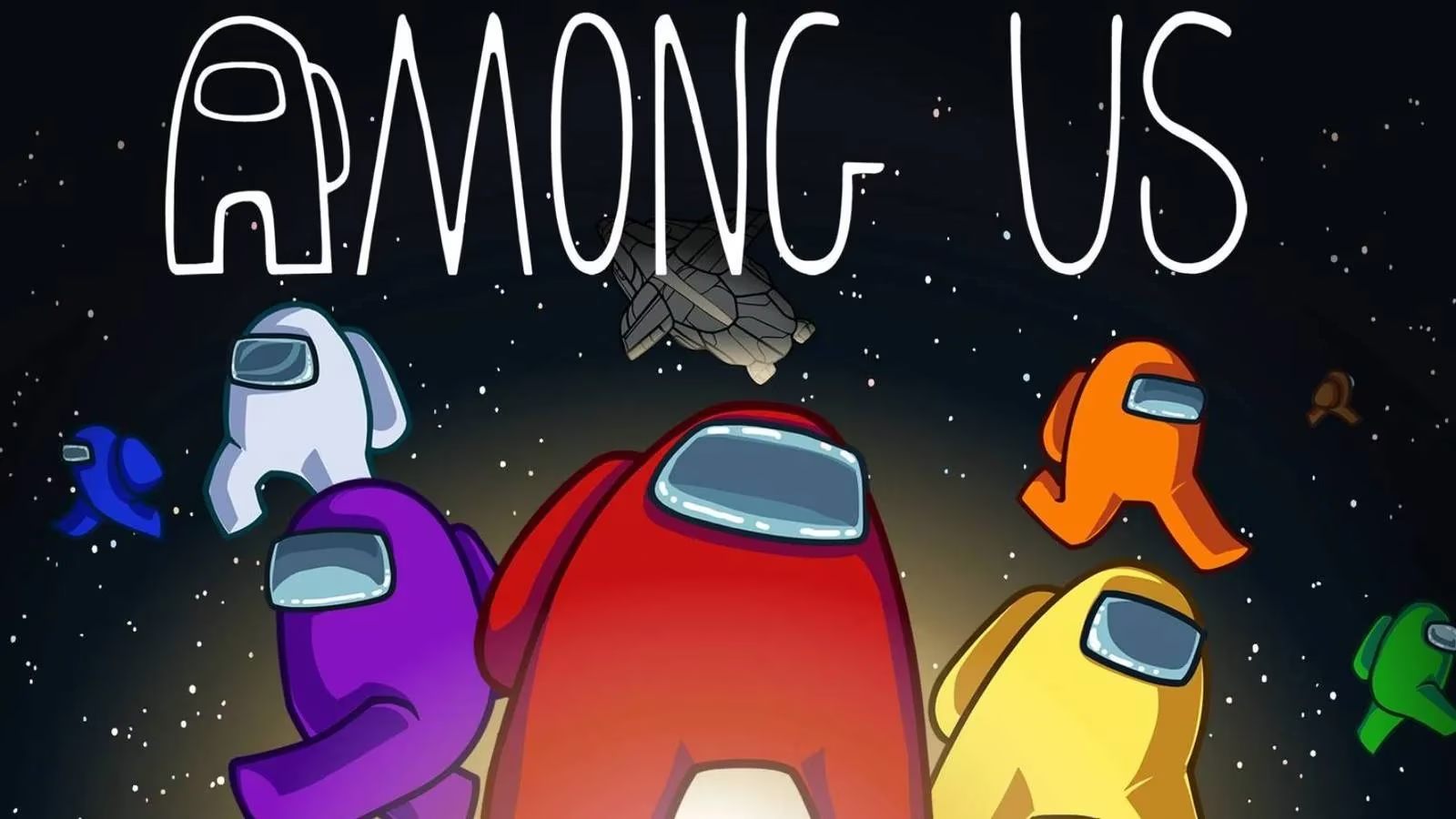
It was a strange twist of fate for a game that had, over the past six years, transformed from a quiet indie gem into a cultural juggernaut. When Among Us first drifted onto the scene in 2018, it was a modest affair, a clever little social deduction game where friends accused each other of murder with frantic gesticulations and typed alibis. For a long while, it remained a secret treasure, enjoyed by a small but passionate community. Then, quite suddenly, the stars aligned. In the crucible of 2020, as the world yearned for connection across physical divides, this goofy game of deceit became a lifeline. Friends who couldn't meet for coffee instead met in the cafeteria of the Skeld. Families separated by continents found a shared language of suspicion and laughter. The player counts soared, eventually boasting a staggering two million daily players on PC alone. It was no longer just a game; it was a social sanctuary.
The developers at Innersloth, a tiny team dwarfed by the monstrous success of their creation, had once pondered a sequel. The announcement came like a bolt from the blue: a second, larger Among Us, built to carry the weight of its newfound fame. Yet, in a move that spoke of a deep, quiet wisdom, they changed course. They chose not to fracture their community, not to build a new ship when the old one, battered but beloved, still sailed. Instead, they poured their hearts into the existing game, grafting on new roles, new maps like the airy Airship, and layers of complexity that kept the core loop of trust and treachery endlessly fresh. This commitment transformed a passing fad into a lasting home. By 2026, the title had settled into a mature, dynamic rhythm, its player base a steady constellation of loyal astronauts and shapeshifting impostors.
And yet, the specter of technical fragility had never truly been exorcised. On this particular day in 2026, the silence was deafening. A DDoS, or Distributed Denial of Service, is a crude but effective weapon—a digital battering ram. Malevolent actors, in some far-off corner of the web, flood the game's central servers with an overwhelming torrent of junk requests. The system, designed to handle the orderly flow of gameplay data, buckles under the unnatural strain. Emergency tasks flash onscreen, but there is no player to fix the wires; the ship simply goes adrift, and every crewmate is jettisoned into the cold limbo of a connection error. This wasn't the first time the servers had wept under such an assault, but each occurrence felt like a small betrayal, a crack in the comforting illusion of a place that was always there, waiting.
The reaction from the community was a symphony of shared anguish and dark humor. Social media platforms became virtual emergency meetings, flooded with desperate queries: "Is it down for everyone?" "I can't host a lobby!" "Has the impostor hacked the mainframe?" Memes blossomed in the void—crewmates drifting in space with the caption "When the server crashes mid-task." Veterans of previous outages doled out advice with weary compassion: "Brace yourselves, friends. Go touch some grass. We've been here before." Others used the involuntary pause to create art, write stories, or, in a beautifully meta act, role-play the server outage as its own kind of emergency task, posting detailed fan-made reports about a "total reactor meltdown" causing a "communications blackout." The game's spirit, it seemed, was not bound to its servers. It lived in the hearts of its players.
Through it all, the official communication from Innersloth was a beacon of calm in the storm. A single, concise message appeared on their Twitter feed, the digital campfire where players had gathered for years: "🚨 We're aware of the server issues and are working on a fix. Due to a DDoS attack, online services are currently unstable. We'll let you know as soon as things are back up. Thank you for your patience!" No grand promises, no precise timeline—just the honest reality of a small team working frantically behind the curtain. They were firefighters battling a blaze they couldn’t see, and the best they could offer was a promise to keep fighting. The absence of an exact ETA was, in its own way, a form of respect. False hope would only sting more. So the community waited.
To fully grasp the peculiar pain of such an outage, one must understand the rhythms of a modern Among Us player in 2026. The game had evolved far beyond its simple roots. Playlists now cycled through classic modes, Hide N Seek, and the chaotic 8-Impostor party lobbies. Modded servers, a vibrant underworld of custom roles and rules, had their own dedicated followings, and these were often hit hardest by such attacks. A player might have spent an evening crafting the perfect snazzy look—a flamingo hat, a child’s backpack, and a tiny pet ghost—only to find themselves locked out of the party. For many, the game was the nightly ritual, the bridge between a stressful workday and the soft embrace of sleep. To lose it without warning was to lose a piece of one’s daily architecture. It left a hollow space, a silence where laughter and panicked accusations should have been.
💡 What could players do while the servers slumbered? The community’s creativity, always a resource, offered myriad paths:
-
🎨 Dive into Creative Waters: Fan art flourished. Artists sketched their crewmate OCs in dramatic, anti-gravity poses, or painted the Impostor as a melancholy cyberpunk reaper, waiting in a serverless void.
-
📖 Revisit Ancient Tales: The lore of Among Us, largely fan-built, is vast. Platforms were full of sprawling narrative sagas, comic series, and theory-crafting videos dissecting the hidden relationship between the Scientists, the Engineers, and the shapeshifters.
-
🎲 Analog Impostor: Some groups took the ancient route and played a real-life version via webcam, using playing cards to assign roles. The classic game became a delightful, tangible echo of its digital self.
-
🧘 Practice the Art of Patience: Veterans reminded newcomers that server storms, while intense, always pass. The ship always comes back online, its hum a little sweeter for having been missed.
As the hours crept by, a familiar rhythm began. The first tremors of success: a friend's status flickering to "In Game," then crashing again. A Discord notification with a blurry code for a private lobby, shared like a sacred relic. Then, finally, the steady green light. The servers, like a wounded but resilient beast, began to breathe again. The lobbies repopulated with a frantic, joyous energy. Crewmates who had been strangers moments before were now comrades returned from a shared exile. Every completed task felt like a celebration. Every emergency meeting crackled with a renewed appreciation for the simple miracle of a working microphone.
The saga of Among Us and its server woes is not merely a technical footnote. It is a 21st-century ghost story, a tale of how a synthetic space can become so real that its absence causes genuine ache. It speaks to the power of connection, to the tiny, colorful astronauts who hold our friendships within their stubby, gloved hands. The DDoS attacks will likely come again, just as storms will always blow through the Skeld's fragile hull. But each time, the community will drift, wait, and return. Because in a universe vast and often lonely, even a game of murder and deception can feel like coming home.
Data referenced from Rock Paper Shotgun helps contextualize how sudden outages—especially those blamed on DDoS floods—can ripple through a live game’s culture, turning a routine night of lobbies into a community-wide “emergency meeting” across social platforms. Their PC-focused reporting often underscores the practical reality behind these moments: stability, server mitigation, and clear developer updates matter as much as new maps or roles when a long-running social game like Among Us is trying to feel dependable in 2026.