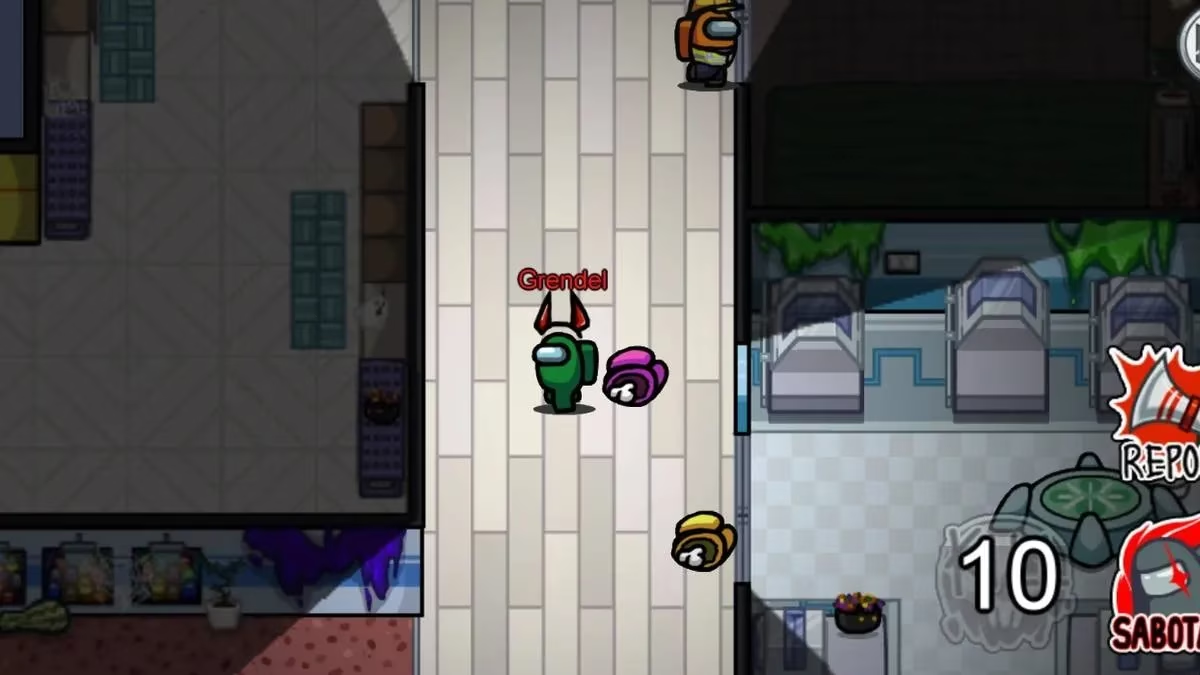
In the social deduction phenomenon Among Us, impostors wield a toolkit of deception, with self-reporting standing as one of its most nuanced and high-risk, high-reward tactics. This strategy involves an impostor personally reporting the body of a crewmate they just eliminated, a bold move designed to project innocence and control the narrative of the emergency meeting. While it can be a masterstroke that deflects suspicion perfectly, a poorly timed self-report can instantly unravel an impostor's facade, painting a target on their back for the rest of the match. The delicate balance of when to employ this tactic, and how to execute it convincingly, separates novice deceivers from veteran manipulators in the corridors of The Skeld, Mira HQ, and Polus.
Understanding the Self-Report: A Double-Edged Sword 🗡️
At its core, a self-report is an attempt to manipulate the crew's perception of events. By being the one to 'discover' the body, the impostor aims to position themselves as a proactive, concerned crewmate. The psychological play is powerful: people are often less likely to suspect the individual who raised the alarm. However, this move inherently concentrates attention. Crewmates, especially experienced ones in 2026, are acutely aware of this tactic and will scrutinize the reporter's story, location, and previous movements with extra care. A single inconsistency in your alibi or a witness placing you near the victim can turn your strategic play into a one-way ticket out the airlock.
Optimal Timing for a Successful Self-Report ⏰
Strategic timing is paramount. The early game presents the most fertile ground for a successful self-report.
-
Round Start Advantage: In the initial moments of a round, trust networks are not yet established. Players are scattered, focused on tasks, and generally more willing to give others the benefit of the doubt. With little contextual evidence, crews are often hesitant to vote, preferring to skip. An impostor can exploit this uncertainty by reporting a body with a simple, calm statement.
-
The Critical Caveat – No Witnesses: This early-game strategy hinges on one absolute condition: ensuring no one saw you with the victim. Before striking, a skilled impostor must have a clear mental map of nearby crewmate locations. Killing in a high-traffic area or when someone just left a room is a recipe for disaster. The golden rule: if there's any doubt about being seen, do not self-report.
Advanced Techniques: Manufacturing an Alibi 🎭
Beyond simple timing, master impostors use sophisticated methods to make their self-report appear authentic.
1. Creating Discovery Witnesses:
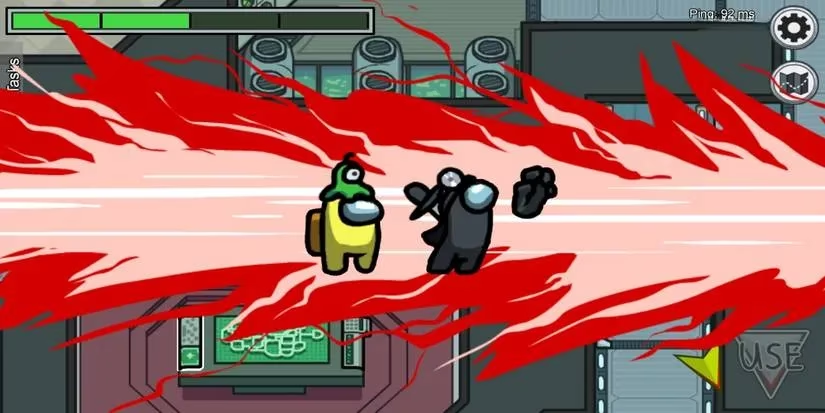
Instead of reporting the body immediately, an impostor can engineer a scenario where they 'find' it alongside other players. This builds a shared alibi. The process often involves:
*   Eliminating a target in a secluded area.

*   Using the vent system to quickly reposition themselves away from the crime scene.

*   Looping back around to the body from a different direction, potentially 'bumping into' other crewmates on the way.

*   Using door sabotages on the room containing the body to delay its discovery, allowing time for other players to arrive in the vicinity.
When multiple people converge on a body at once, suspicion is diluted. Those other players may even vouch for you later, stating, "We found the body together."
2. The High-Stakes Frame Job:
This is a gambit reserved for confident impostors. If you are with two other crewmates, and one of them is already under suspicion from the group, you can kill the third, unsuspected player and immediately self-report, blaming the already-doubted individual. This works best in the mid-to-late game when player counts are low and paranoia is high. It capitalizes on the crew's existing biases. A crucial note: this is exceptionally risky if "Confirm Ejects" is enabled, as the crew will learn the ejected player's role. If it's off, however, the deception can be devastatingly effective.
When to Absolutely Avoid Self-Reporting 🚫
Certain situations make self-reporting a catastrophic mistake.
-
The Late-Game Peril: When only a handful of players remain (e.g., 4 or 5), self-reporting becomes extremely dangerous. Players naturally buddy up or track each other's movements through logical deduction. If you report a body in a 5-player game, the remaining three will immediately analyze everyone's last known positions. Your report might provide the final piece of the puzzle that convicts you. In these tense final moments, impostors are better served using strategic sabotages like Reactor Meltdown or O2 Depletion to split the crew, or attempting a daring double-kill to end the game outright.
-
Presence of a Hard Alibi: If a crewmate can definitively state they were with you the entire time since the last meeting and you were never alone, self-reporting a body found elsewhere is an instant loss. Their testimony provides irrefutable proof of your innocence in that specific kill, which paradoxically makes you the prime suspect for reporting it.
The Modern Meta: Adapting to 2026 Playstyles 🔄
The player base has evolved significantly. Today's crewmates are more systematic, often using visual tasks, detailed location logs (on certain maps), and structured communication to weed out impostors. To adapt, the modern impostor's self-report must be accompanied by flawless background work:
-
Maintain a Task Façade: Be seen 'performing' visual or long-duration tasks earlier in the round to build credibility.
-
Control the Narrative: When you report, offer a concise, believable story. "I was heading to Shields from Electrical and found them outside Medbay" is better than a vague "I found them."
-
Read the Room: Gauge the crew's temperament. Are they trigger-happy or cautious? A cautious crew is more likely to skip after an early self-report, giving you more time.
Ultimately, self-reporting in Among Us is less about a rigid rule and more about theatrical improvisation combined with cold, logical risk assessment. It requires spatial awareness, social intuition, and the courage to lie directly to a group of friends hunting for you. When executed with precision, it can secure a win from the jaws of defeat. When botched, it serves as a dramatic, self-inflicted conclusion to your impostor run. The vents are there for escape, but sometimes, the most powerful move is to walk calmly to the body and press the button yourself.