It's 2026, and looking back, the quiet, steady resurrection of Telltale Games is nothing short of remarkable. This is a studio that, years ago, collapsed under the weight of its own success—a perfect storm of mismanagement, contractual chaos, and vanished funding. Yet here we are, with a reborn Telltale under new leadership, and one of their most anticipated projects is finally on the horizon: The Wolf Among Us 2. As a player who loved the original's gritty, neon-lit noir world, I can't help but wonder: what makes this comeback different? Is it just about finishing a beloved story, or is it about building a studio the right way this time?
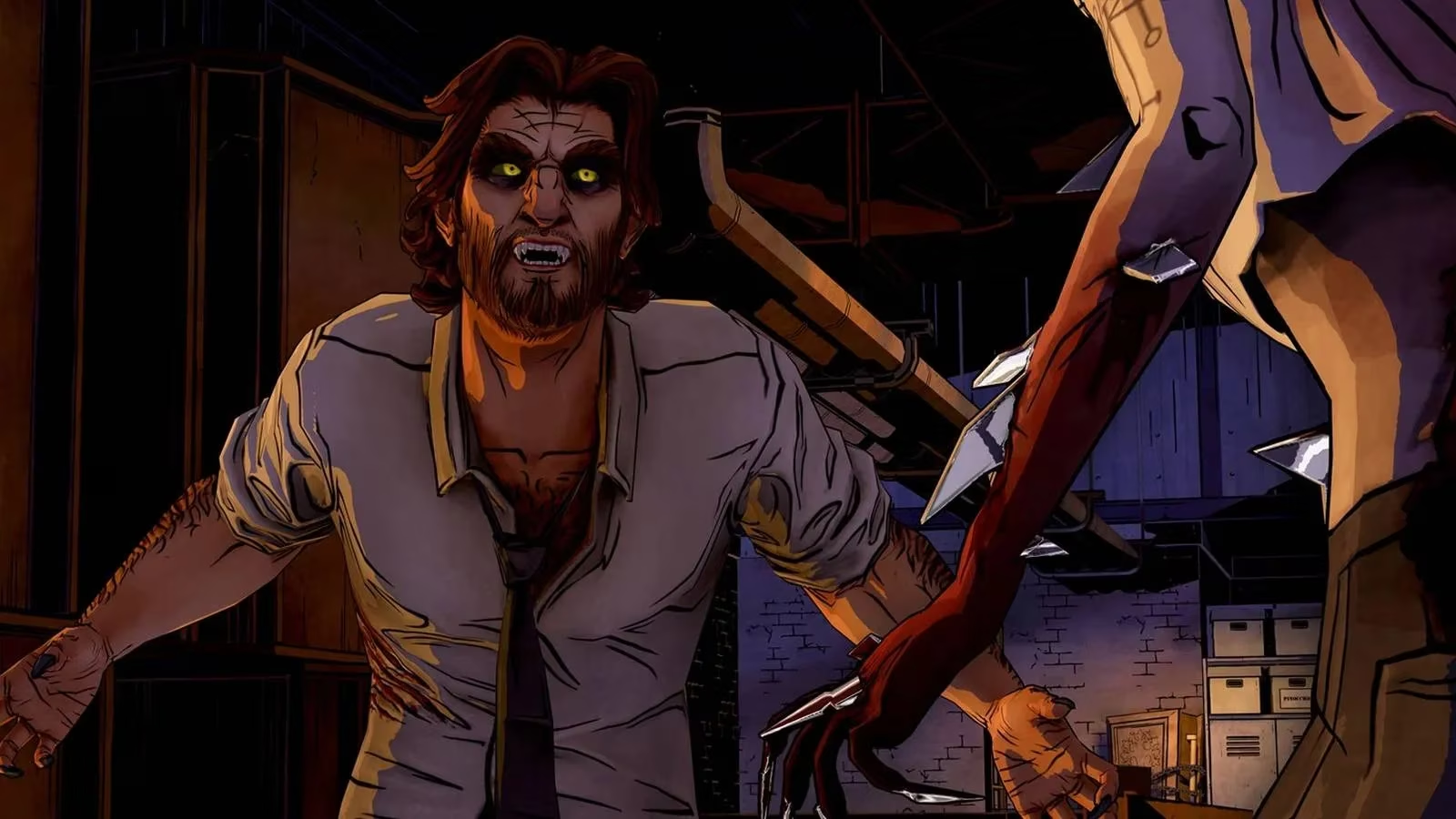
The journey to this sequel has been anything but straightforward. Announced back in 2019, the path has been littered with obstacles. CEO Jamie Ottilie detailed the struggles: rebuilding the team from the ground up, securing funding, navigating a global pandemic, and—perhaps most daunting—having to start development from scratch. Why start over? The previously canceled sequel was built on outdated technology, a relic of the old Telltale. The new team made a bold, costly decision: to switch the game's development from Unreal Engine 4 to the more advanced Unreal Engine 5. This wasn't just a tech upgrade; it was a statement of intent. It meant redoing "quite a bit of work," but it promised crucial new tools for the artists and engineers crafting Bigby Wolf's return to the seedy Fabletown.
This decision led to the game's delay out of its original 2023 window. But here's the heartening part: the delay wasn't due to more mismanagement or panic. It was for artistic integrity and, more importantly, for the well-being of the team. In an industry where 'crunch'—forcing excessive overtime—has been a normalized, toxic solution to delays, the new Telltale is explicitly rejecting it. This is a profound shift. The old Telltale was notorious for crunch, a practice that burned out its talented staff and directly impacted the quality of its games. Bugs were rampant, even in their best titles, and the relentless, formulaic release schedule often led to rushed, half-baked episodes.
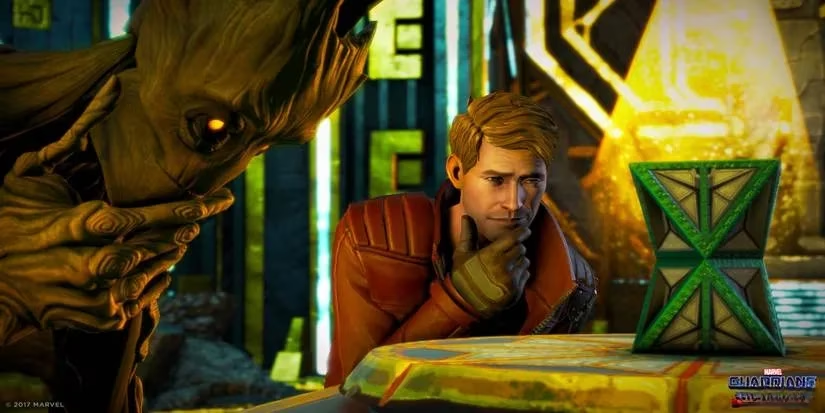
Think about it: during Telltale's heyday, we'd get new episodes of various series every other month. The pace was unsustainable. Remember Guardians of the Galaxy? It felt unfinished. Their Game of Thrones game was released mid-series, leaving it feeling like an afterthought. This rushing even hurt the original The Wolf Among Us, whose final episode, while ambitious, felt disjointed compared to the tight, compelling mystery of its premiere.
So, what is the new Telltale's formula? It seems to be the opposite of a formula. It's patience, planning, and polish. They've stated that this new season is being fully planned, developed, and polished before any episode is released, aiming for a consistent level of quality throughout. This approach is a direct lesson learned from the past. The old 'Telltale Formula' became predictable and stifling, even when games like Tales from the Borderlands showed that a little innovation could work wonders. The new leadership seems determined not to repeat those mistakes.
But this philosophy extends beyond a single game. It's about building a sustainable studio culture. Telltale has already put this into practice with other projects, like their The Expanse series, by smartly partnering with experienced developers like Deck Nine Games to share the load. They've made a public commitment to a healthy work-life balance. In 2026, as we see the results of this approach, it feels revolutionary. Can a studio truly deliver a high-quality, narrative-driven experience without burning out its team?
The implications are huge. If Telltale can successfully deliver The Wolf Among Us 2 at a near-AAA level of quality without resorting to crunch, it challenges the entire industry. It puts a glaring spotlight on other studios' problematic practices. Why should 'crunch' be an accepted part of game development when a studio rising from the ashes is proving there might be a better way? It's a question that could, and should, force a long-overdue conversation.
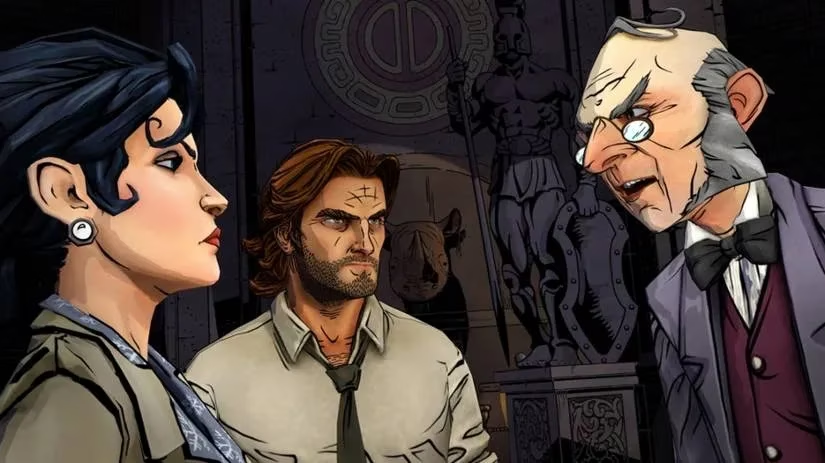
For me, as a player, this changes how I view the upcoming sequel. My excitement isn't just about returning to a world of fairy-tale characters hiding in a gritty urban jungle, though that is a huge part of it. It's about supporting a project born from a commitment to doing things right. I want to see Bigby Wolf, the gruff sheriff, navigate new conspiracies and crimes. But I also want to know that the team behind him was given the time and respect to tell his story to the best of their ability.
What can we expect from The Wolf Among Us 2 in this new context?
-
A Cohesive Narrative: With the entire season being developed holistically, we can hope for a story where the ending pays off the promises of the beginning, unlike the rushed finale of the first season.
-
Technical Polish: The move to Unreal Engine 5, combined with a sane development schedule, should result in a visually stunning and far less buggy experience than Telltale games of old.
-
Creative Risks: Freed from the pressure of a brutal monthly output, the writers and designers might feel more empowered to evolve the classic Telltale gameplay, perhaps incorporating more of the nuanced choices and consequences that fans crave.
In the end, the story of The Wolf Among Us 2 is now two-fold. It's the next chapter for Bigby and the residents of Fabletown. But it's also the defining chapter for the new Telltale Games. It's their chance to prove that a studio can learn from its past, treat its people well, and still deliver a fantastic game. As we await its release, I'm not just hopeful for a great noir mystery; I'm hopeful for a better model of how to make one. The Big Bad Wolf is coming back, and this time, he's bringing a healthier future for game development with him. 🐺✨