Here we are in 2026, and I just saw a headline that made me do a full-on facepalm. 🤦♀️ Apparently, a major news outlet is trying to connect the dots between a recent, tragic real-world crime and the suspect's gaming habits—specifically, his love for Among Us. Seriously? We're still doing this? It's like we've time-traveled back to the early 2000s moral panic, but with a fresh coat of paint and even less logic.
The case itself is incredibly serious and complex, involving deep-seated frustrations with systemic issues. Yet, some media narratives seem obsessed with a tiny, irrelevant detail: the fact the accused enjoyed a popular social deduction game. It feels so bizarre and disconnected. If you've ever played Among Us, you know it's a game about colorful, bean-shaped astronauts trying to complete tasks while rooting out an impostor. It's goofy, it's social, and it's about as far from a real-life crime scene as you can get. To suggest it 'inspired' or contributed to a violent act is not just a stretch—it's a complete leap into nonsense.
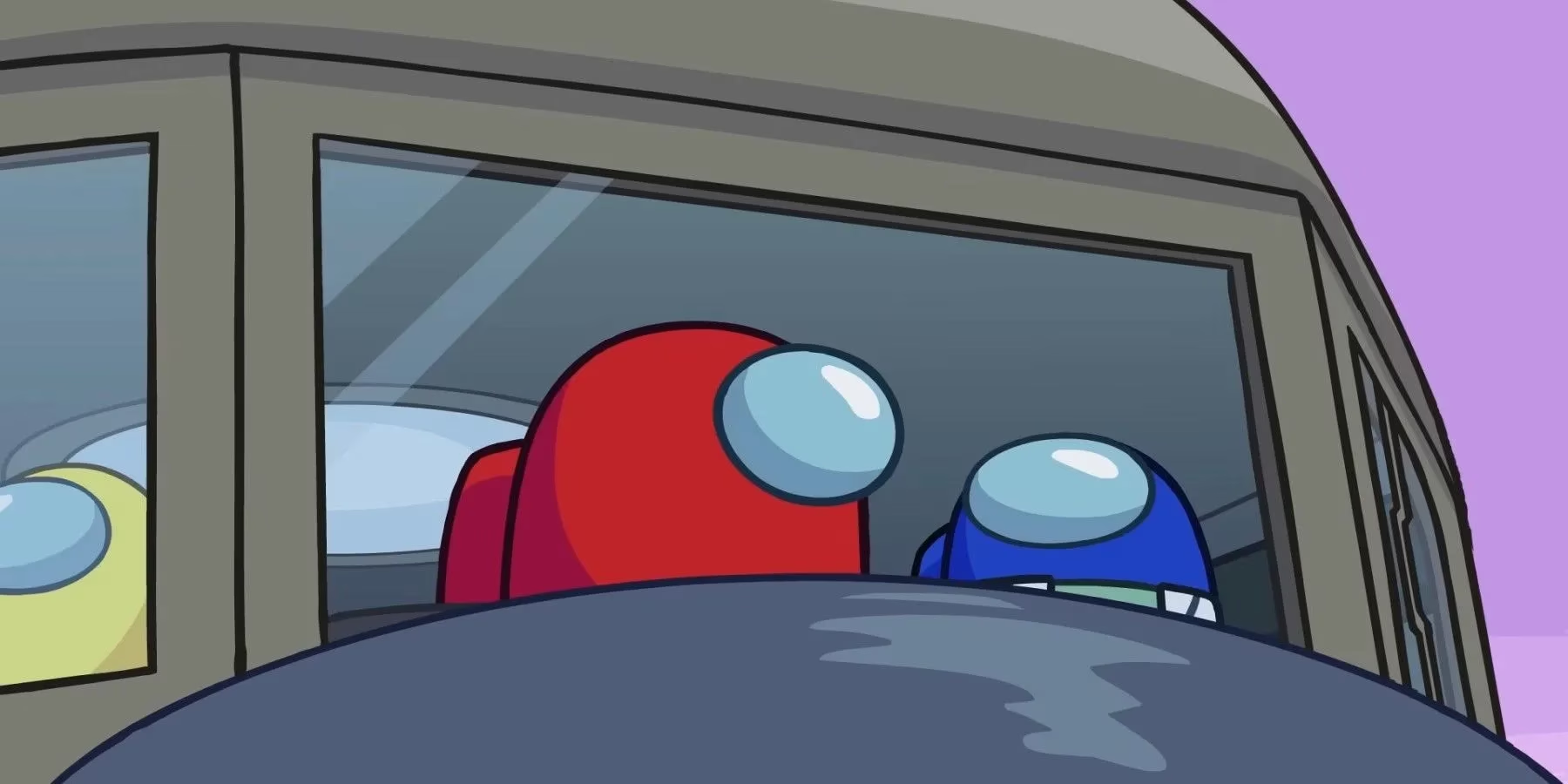
Let's break down why this is so frustrating:
-
It trivializes the actual issues. By focusing on a video game, the conversation shifts away from the real, difficult topics that might be at the heart of the tragedy—things like systemic failures, personal struggles, or access to resources.
-
It's a lazy narrative. It's much easier to point at a game and say 'This is the problem!' than to engage with messy, complicated societal problems that don't have easy fixes.
-
It stigmatizes a normal hobby. For millions of us, gaming is just a fun way to relax and connect with friends. Framing it as a 'clue' to criminal behavior is unfair and outdated.
This whole situation reminds me of the old, tired arguments we heard for decades. Remember when they blamed rock music, then certain movies, and always, always video games for society's ills? It's a cycle that never seems to end, even as the medium evolves and becomes a mainstream art form and pastime for people of all ages.
The suspect in this case, according to reports, had a long history of speaking out against specific industries and enduring personal hardship. Those seem like vastly more relevant factors to examine than his choice of weekend entertainment with friends. By highlighting the game, it feels like the media is trying to create a 'quirky' or 'ironic' detail for the story, when in reality, it's just a distraction. A harmful one.

I'm not saying media or games exist in a vacuum. Of course they don't! We can have nuanced discussions about:
-
How competitive online spaces can bring out the worst in people.
-
The influence of certain online personalities.
-
The need for balanced screen time and real-world interaction.
But leaping from 'he played a popular game' to 'the game is a factor in a violent crime' is not nuance. It's sensationalism. It ignores the actual stated motives, the life circumstances, and the human agency involved in making terrible choices.
It also has a chilling effect. This kind of coverage reinforces the idea that enjoying video games is somehow a mark of suspicion or a character flaw. It pushes us back into a defensive position, having to constantly justify a hobby that is, for most people, perfectly harmless and positive.
So, what's the takeaway here in 2026? We need to be smarter consumers of news. We need to call out these lazy connections when we see them. And we need to keep pushing the conversation toward the substantive, difficult issues that truly matter, rather than letting them be buried under a mountain of irrelevant 'fun facts' about someone's leisure time.
The real story isn't on a spaceship in a video game. It's here, in the complexities of our world. Let's focus our energy there.